case studies

Bikesharing EDMTECH


focus areas
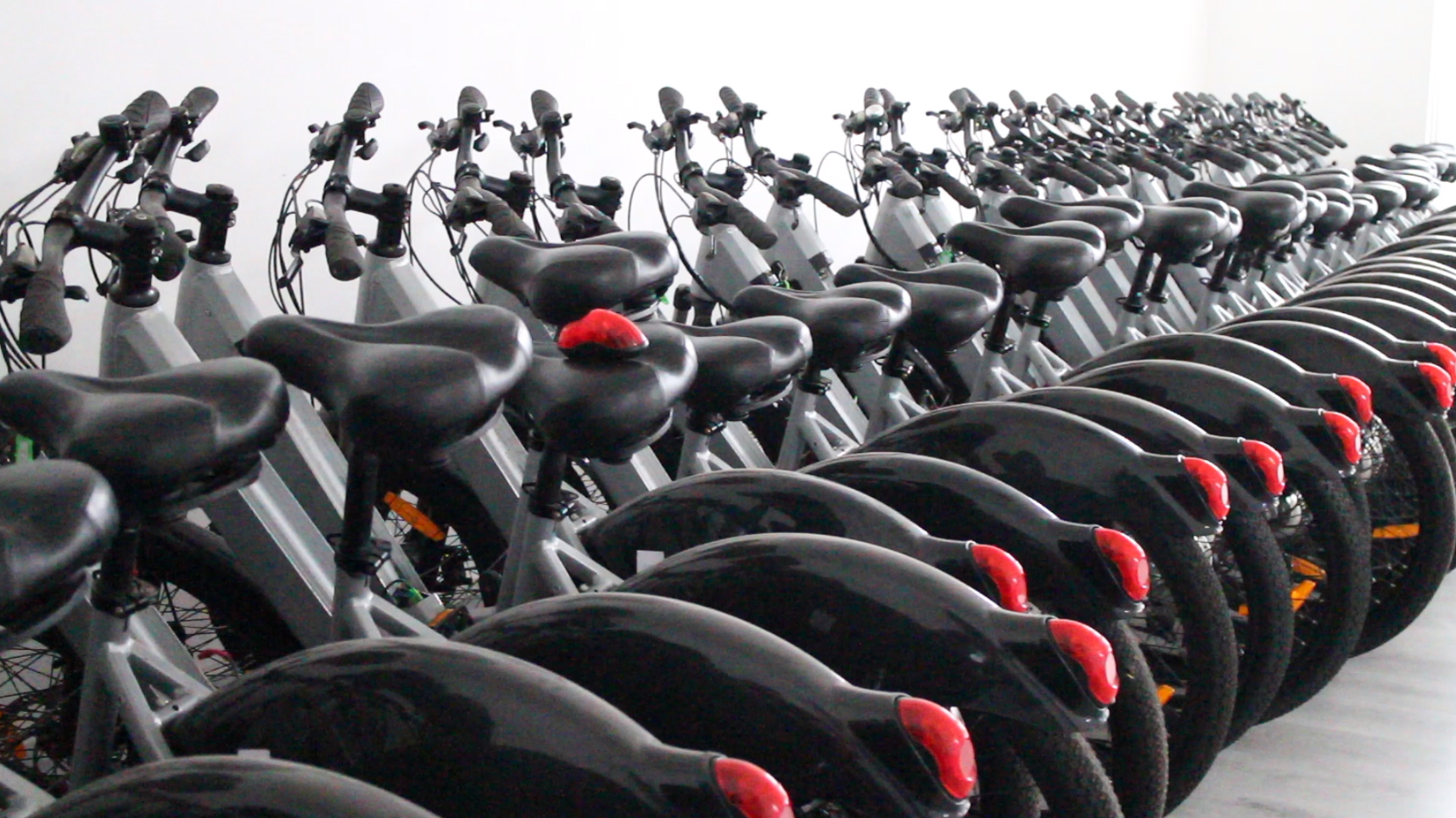
The development of Lisbon's bikesharing system in 2017 kickstarted a number of other bikesharing and mobility projects in different cities.
We have created our own bikesharing system, versatile enough to implement on any city. Today, its implementation is a part of everyday life of people in Lisbon, Santo Tirso, Águeda, Seia, Covilhã, Alenquer, Lousada, and it's currently being implemented in other cities.
Millions of trips and counting
Stations and counting
Average number of trips/day


technical info
Project
EDMTECH Bikesharing System
Focus Areas
edm . labsedm . smartcitiesedm . mobilityedm . batteries
Briefing
Our Bikesharing System needed to meet these needs
- • Electric/Conventional Bike: battery and GSM/GPS module;
- • Stations distributed throughout the city;
- • Docking system;
- • Comm management Server/Database/Backoffice;
- • Mobile device app;
- • RFID Renting Card System;
- • Battery Charge Management;
Technologies
• GPS • GSM • CAN Bus • Lithium Batteries • BMS
Final Implementation
We developed and deployed a bikesharing system with batteries, GSM/GPS modules and custom BMS, online management platform with an app, with the capacity to manage thousands of trips, users and bikes per day.

Access Control System


focus areas
Developed for use in labs with extremely demanding requirement accesses, this system controls multistage door entrances.
It allows, for example, to stop more than a door to be open at the same time. In case of implementation on sterilization antechambers, you can also define a time window for the locking mechanisms.


technical info
Project
Access Control System
Focus Areas
edm . labsedm . industry
Briefing
The system should be able to be both versatile and secure, easy to clean, implement different types of permissions and minimal use of cables.
Technologies
Capacitive Sensor;IR Sensor
Final Implementation
As a solution, not only the interface but a new wiring system were implemented in order to communicate with a Central Unit. The CU catches the data from the different interface units and commands the locking mechanisms. There are different interface units (passive and active interface) with different demands and technologies (IR and capacitive).

Temperature Acquisition System


focus areas
This solution allows for the real-time monitorization of up to 24 temperature sensors during the moulding processes of wind turbine blades.
Besides the high number of permitted probes, it is also possible to implement thermistor probes, thermocouple and RTD-PT100. All the information is sent and settings received via ModBus TCP.
Siemens Gamesa Production Percentage
LM Production Percentage


technical info
Project
Temperature Acquisition System
Focus Areas
edm . labsedm . industry
Briefing
This system would need to successfully gather and acquire the data coming from different types of temperature sensors. The size of wind turbine blades would mean small data collecting errors could create big problems on the moulding process.
Technologies
• Thermistor; • PT100; • Thermocouple; • ModBus TCP.
Final Implementation
The need to monitor the molding process temperature at many different points simultaneously and in real time allowed for the creation of a system that uses different probes and can be successfully used in different projects.

Self-Service Laundry Management

focus areas
This system aims to fill a gap in the market. Managing the cleaning products in self-service laundry stores saves time and cuts costs.
This solution allows control of up to 8 machines simultaneously, and it's compatible with most washing machine brands in the market.


technical info
Project
Self-Service Laundry Management
Focus Areas
edm . labsedm . industry
Briefing
This system needed to allow for more customization and flexible management than other solutions on the market, and still be able to be used in different types of stores, with different machines.
Technologies
• RS485; • Capacitive Sensor.
Final Implementation
The system implemented a master-slave topology, with communication RS485. A slave per machine reports to the master. A plumbing management algorithm then optimizes the system.

Emergency Battery for High Sea Farm Fishing

focus areas
Successful and healthy aquaculture projects need constant monitorization, but also face the obstacle of being setup dozens of miles away from the coast.
The system is composed of two buoys: one keeps the fuel, the ration, the comm and management system, and the other is the cage for the fish. The ability to raise and lower the cage helps keeping the ideal temperature for the fish to grow. Our battery system successfully kept the system as autonomous as possible in remote location.
Days without fuel supply
Max charge amperage and continuous discharge
Overcurrent amperage


technical info
Project
Emergency Battery for High Sea Farm Fishing
Focus Areas
edm . labsedm . industryedm . batteries
Briefing
The distance from shore of the buoys (~35Km) is both vital in growing healthy salmon, but it also poses an expensive logistical problem. The use of a reliable, capable and autonomous battery system would be ideal in this project.
Technologies
• LiFePO4 50A cells; • 24V@2600Ah
Final Implementation
The system is composed of two buoys: one keeps the fuel, the ration, the comm and management system, and the other is the cage for the fish. The ability to raise and lower the cage helps keeping the ideal temperature for the fish to grow. Our battery system successfully kept the system as autonomous as possible in remote location