Solutions / Industrial Energy Storage
Industrial Energy Storage Systems

From rack to container, one engineering system.
Every storage project has its own scale and constraints. We size each SOLID and LOGIC system around your consumption profile, available space and existing grid — and follow the project from study to commissioning.
Reliable and performant
Our solutions are based on the most resilient technology stacks, using the best cell chemistry, smart management systems and system design.
Custom and adaptable
Each product line is designed and implemented to solve each customer's needs, avoiding waste and optimising for the existing infrastructure. Modularity is how we achieve this.
Certified and compliant
We comply fully with all European regulations.
CE · IEC 62619 · UN 38.3 · RoHS
The right scale for every project
Four systems, one continuous energy scale.
Choose your starting point — modularity does the rest.
The right scale for every project
Four systems, one continuous energy scale.
Choose your starting point — modularity does the rest.

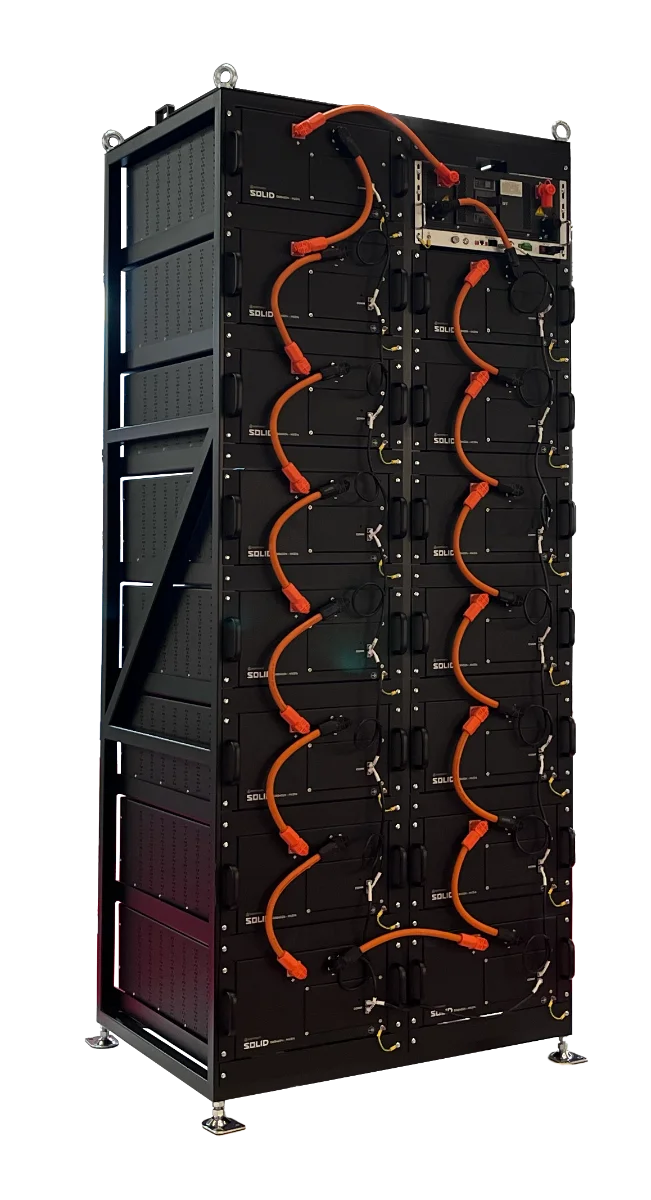
SOLID is a compact, high energy-density battery solution with a wide application range. With modularity at its core, SOLID.R starts at 48 kWh for small to medium sized indoor applications; SOLID.C scales up to multiple MWh in a container.
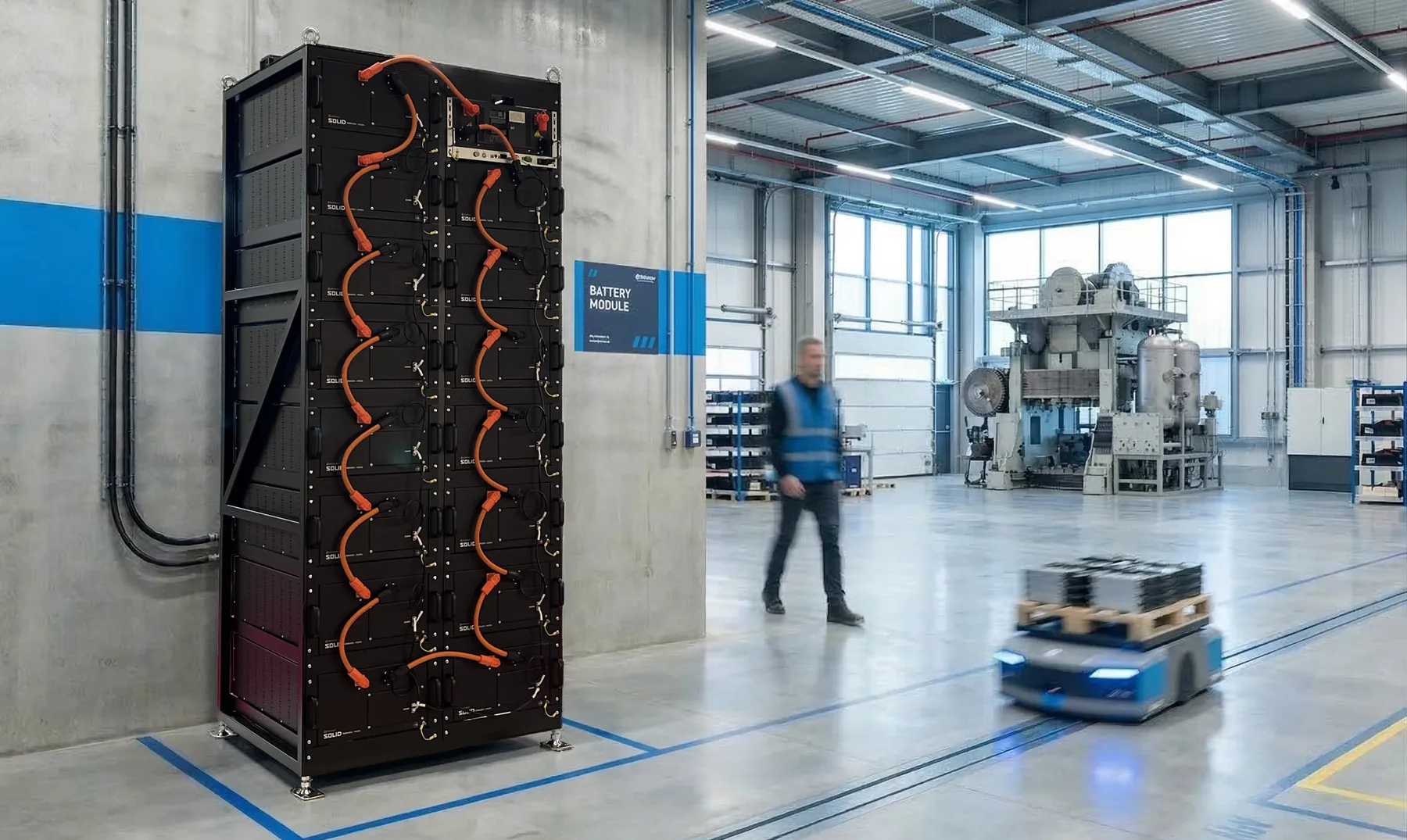
SOLID.R — the modular rack
Built with safe LiFePO4 technology, it offers low self-discharge for extended storage, no memory effect, and reliable performance in varied conditions. An intelligent BMS provides comprehensive protections against overcharge, over-discharge and extremes while balancing cells.
Flexible and scalable: 3 to 15 modules per rack and up to 15 racks in parallel — from the technical cabinet to 3.6 MWh.
- Cell chemistry
- LiFePO4
- Module energy
- 16.08 kWh
- Modules in series per rack
- 3 – 15
- System energy
- 48.2 – 241.2 kWh
- Operating voltage
- 648 – 846 V
- Charge/discharge current
- 100 A nominal / 125 A max.
- Cycle life
- ≥ 8000 (0.5C, EOL 70%)
- Parallel with SBMS
- up to 15 racks · 3618 kWh
- Module nominal voltage
- 51.2 V
- Module capacity
- 314 Ah
- Working temperature
- Charge 0–55 °C / Discharge -20–55 °C
- Communication
- CAN 2.0 / RS485
- Humidity
- 5 – 85% RH
- Altitude
- ≤ 2000 m
- IP rating
- IP20
- Dimensions (W×D×H)
- 1060 × 850 × 2550 mm (15 mod.)
- Approximate weight
- 1960 kg (15 mod.)
- Efficiency
- 90%
- Certification
- CE / IEC 62619 / UN 38.3 / RoHS
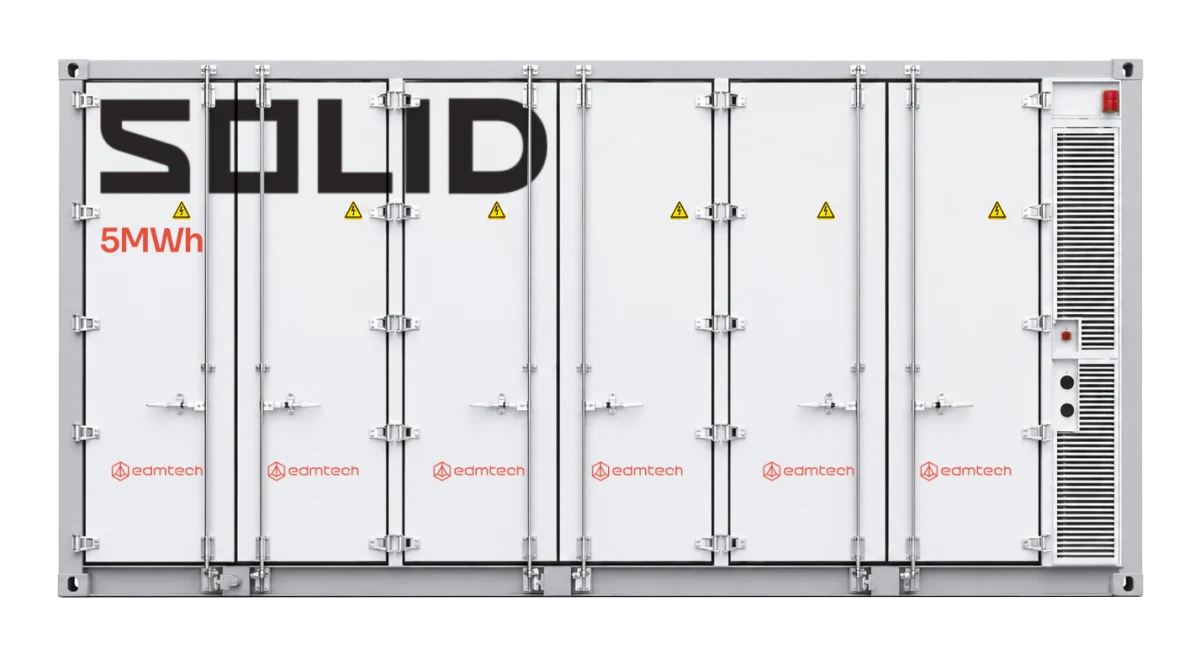
5 MWh in a 20-foot container
Designed for large-scale installations, SOLID.C combines 1500 V DC battery architecture, liquid cooling with 50% ethylene glycol and pack-level fire suppression in a modular, non-walk-in platform that cuts land use by 35%.
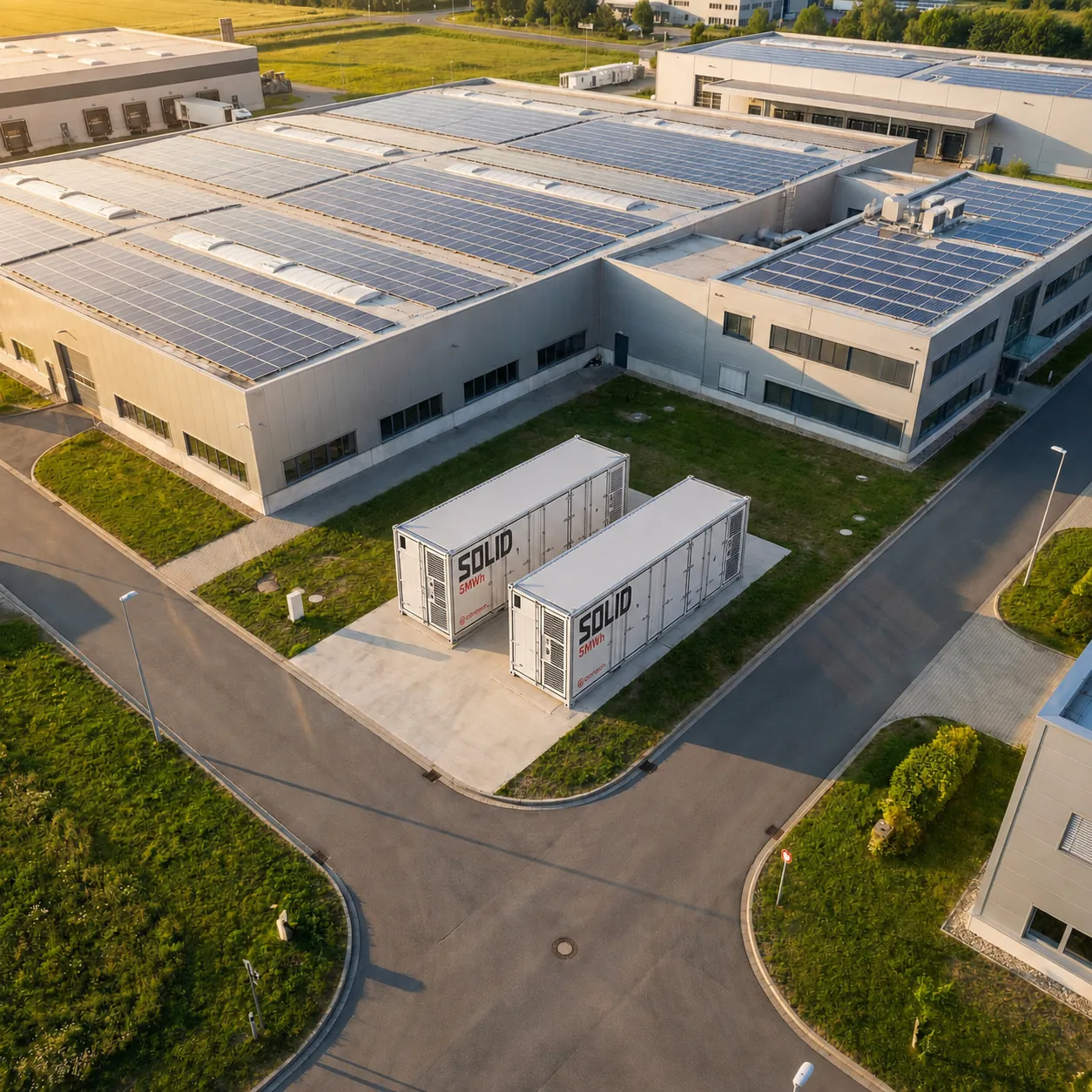
- Total energy
- 5016 kWh
- Nominal power output
- 2500 kW
- Battery voltage range
- 1040 – 1497.6 V
- Cooling
- Liquid / 50% glycol
- IP rating
- IP55 (pack IP67)
- Fire fighting
- PACK-level perfluoro; aerosol optional
- Dimensions (W×D×H)
- 6250 × 2438 × 2896 mm
- Weight
- ≤ 42 t
- Cell type
- 3.2 V, 314 Ah
- Configuration
- 1P416S × 12
- Operating temperature
- -20 – 50 °C
- Humidity
- 0 – 95% RH (no condensation)
- Altitude
- ≤ 3000 m (standard) / ≤ 5000 m (optional)
- Anti-corrosion degree
- C4-M (C5-H alternative)
- Communication
- CAN / Ethernet
High safety
LiFePO4 cells with high thermal stability. IP55 for outdoor use and C5 protection class for a 20-year service life. Preventive fire strategy with an independent extinguishing system.
Durability
Integrated high-efficiency liquid cooling keeps the temperature spread inside the container below 5 °C.
High integration
Modular 1000 / 1500 V design with electrical control and batteries in separate compartments. Ships as a prefabricated unit — a DC container that pairs with dedicated HV inverters or standard three-phase PCS, scaling in parallel for multi-MWh projects.

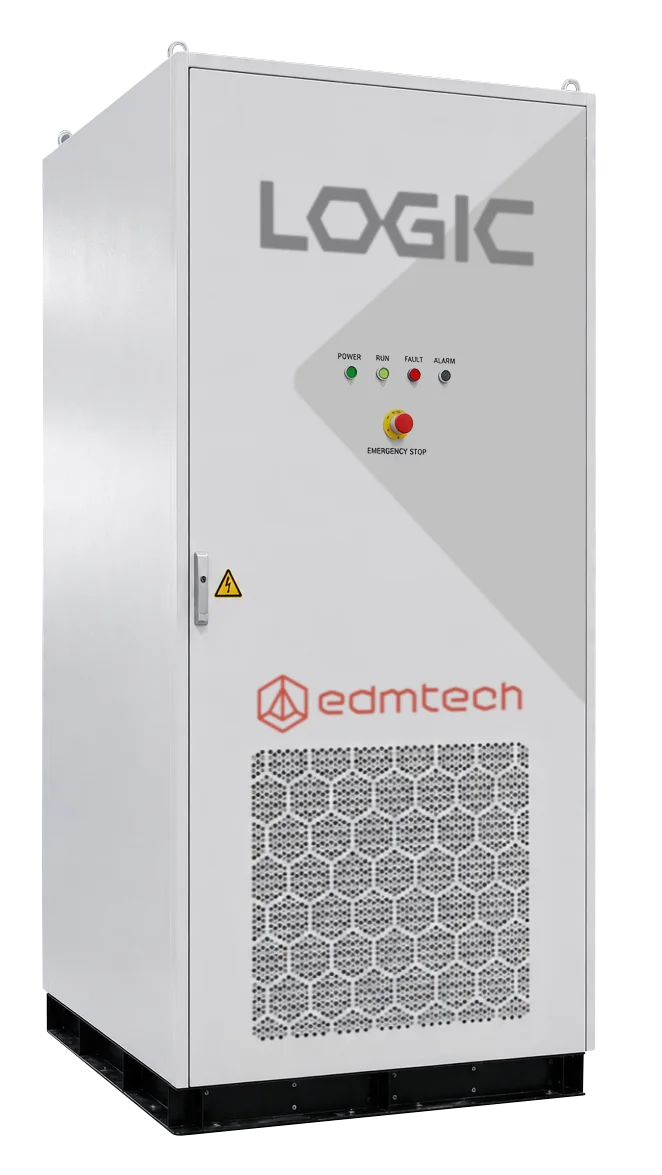
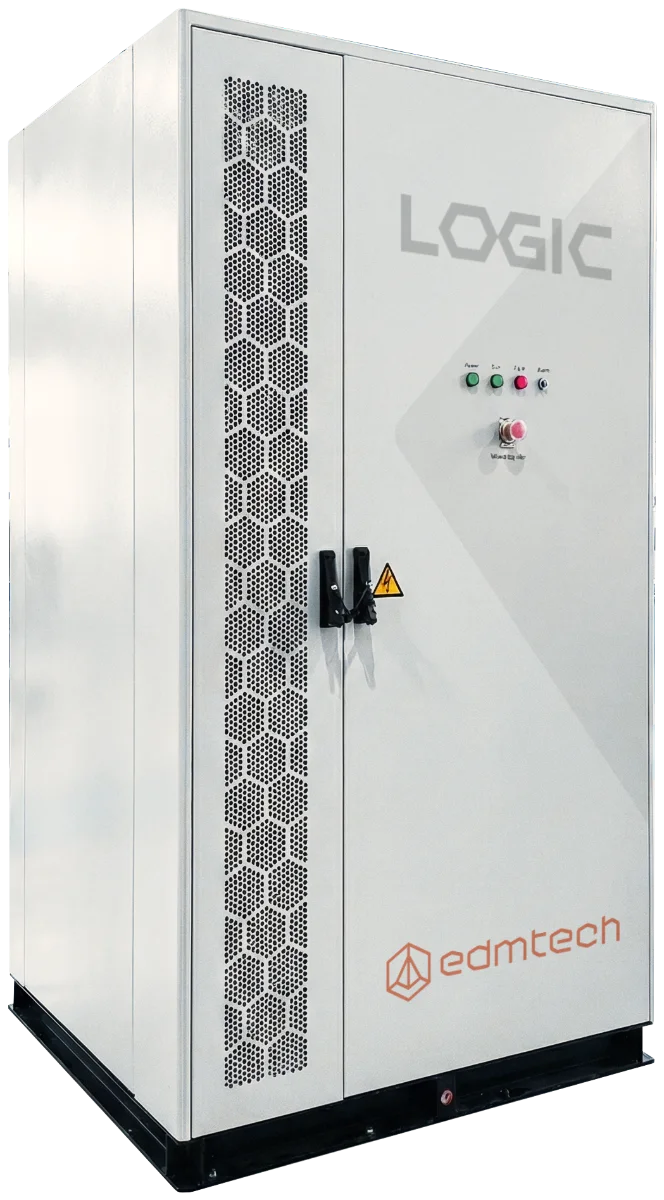
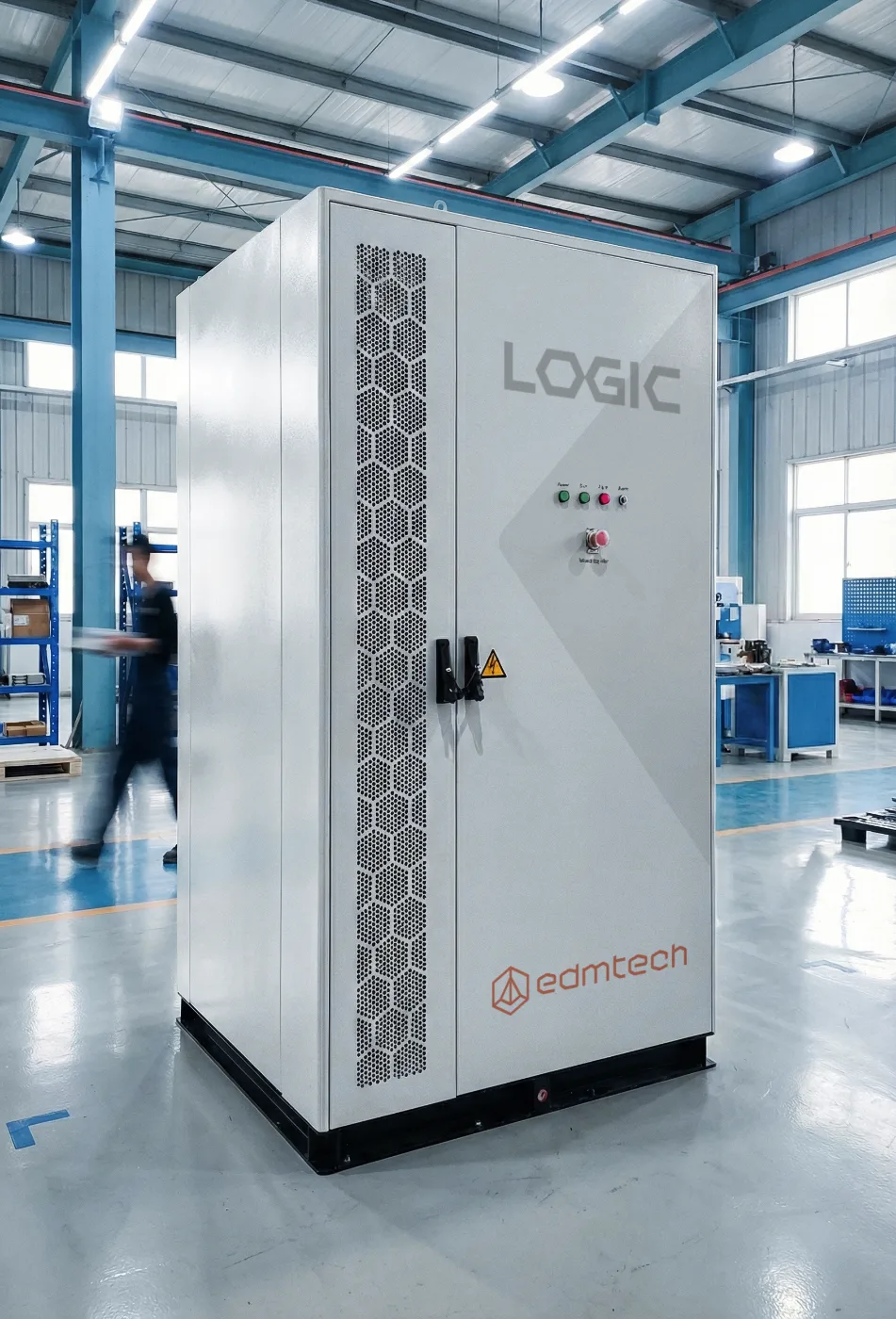
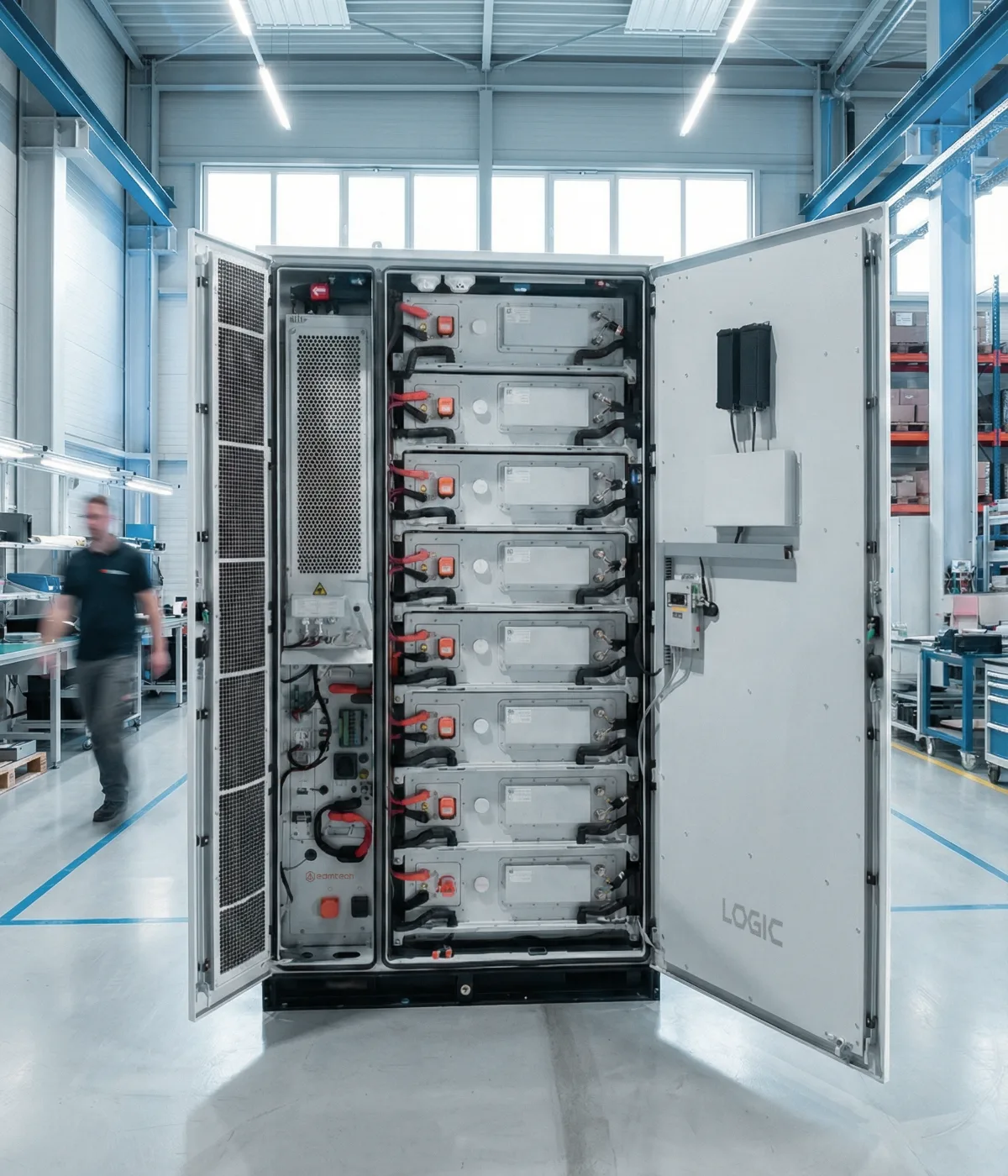
LOGIC is a super-compact, all-in-one energy storage solution with optimized energy density, liquid cooling, integrated fire suppression and built-in inverter. Ideal for medium-scale installations — efficiency, safety and simplified deployment.
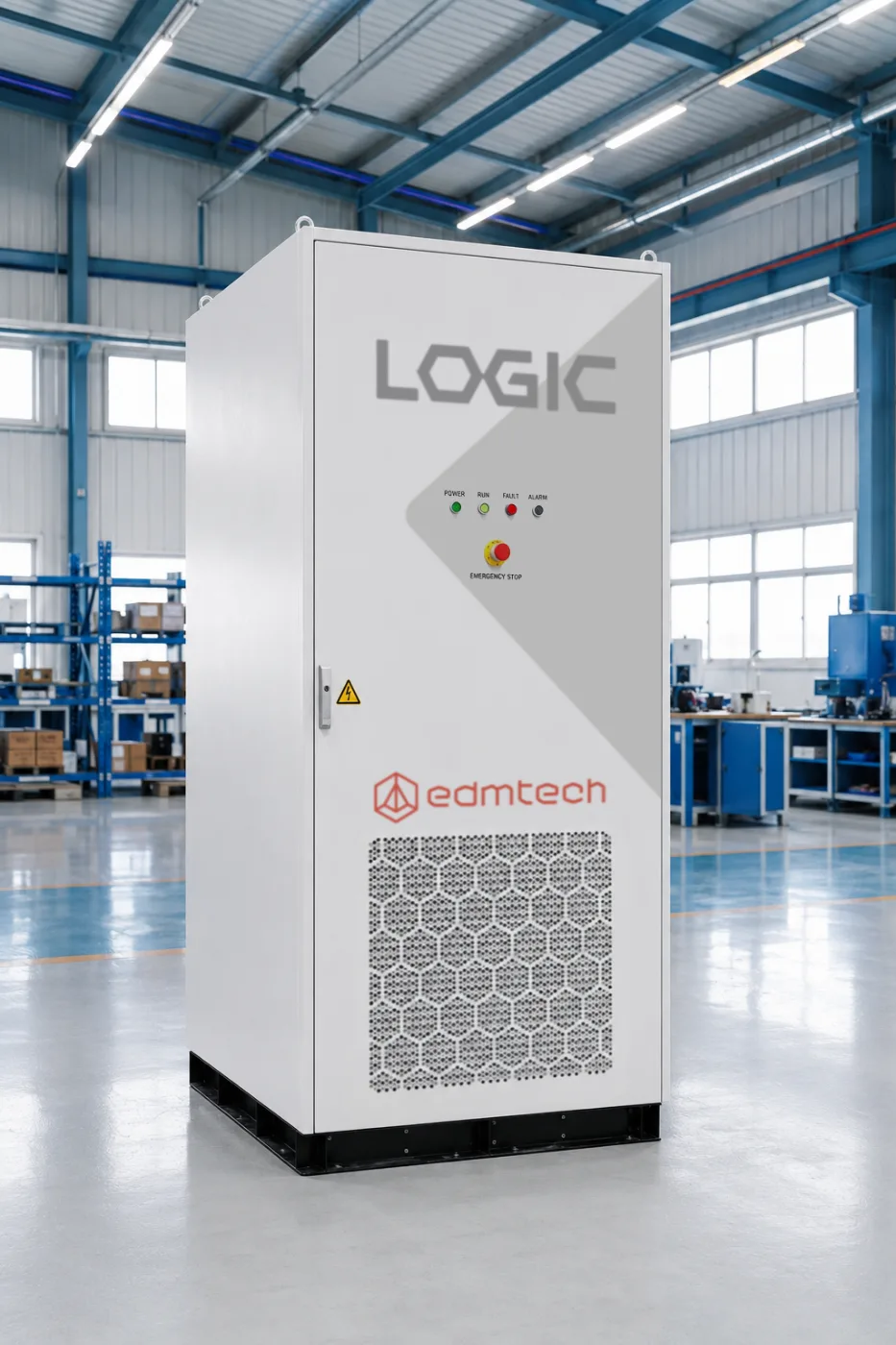
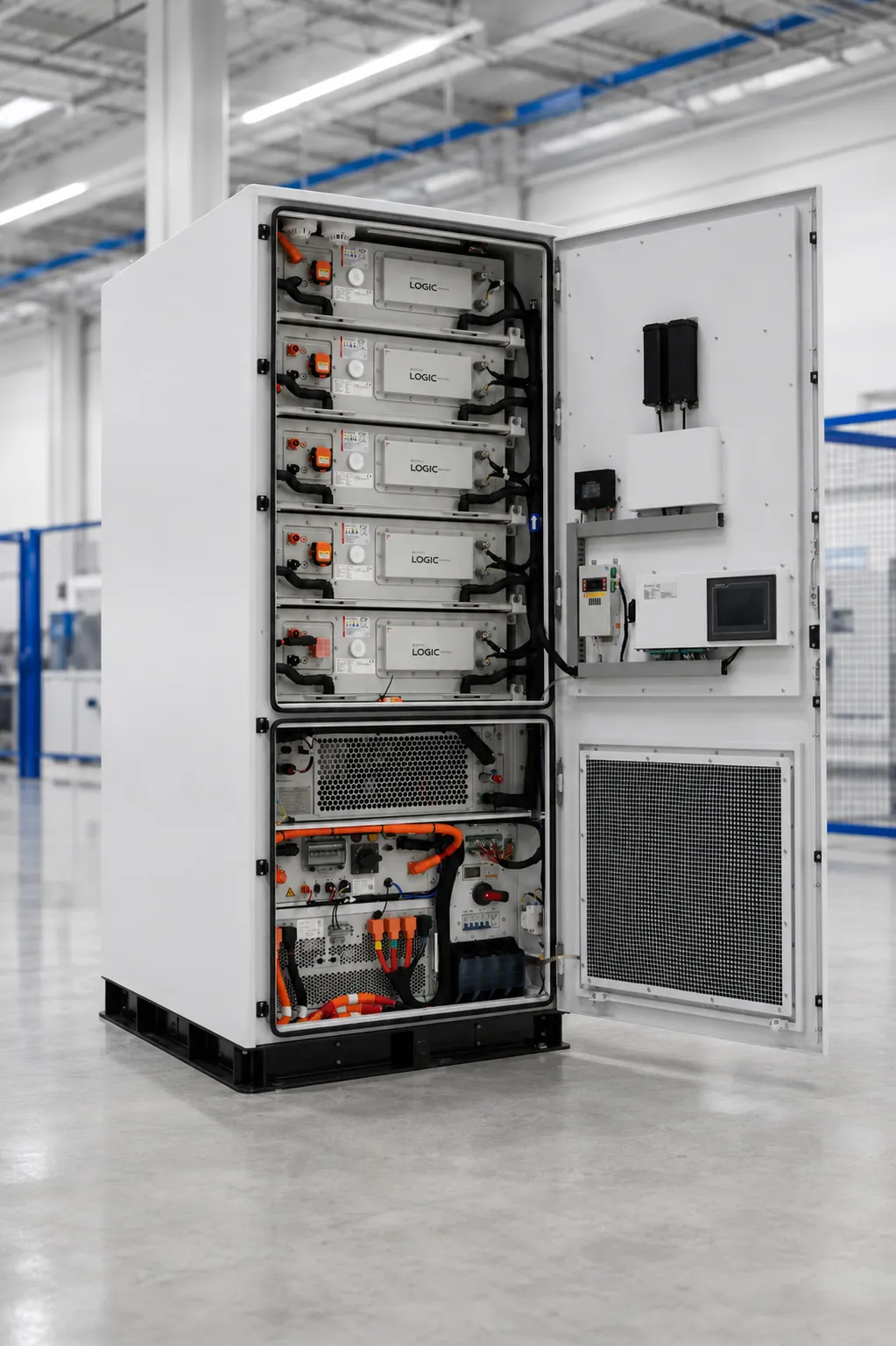
LOGIC 260-125 — AC, ready to connect
Integrates battery, fire protection and liquid cooling into a single sleek cabinet, minimizing space, easing installation and reducing costs. Its modular architecture scales seamlessly with parallel units for unlimited power.
- Nominal AC power
- 125 kVA
- System capacity
- 260 kWh @25 °C, 0.5P
- Voltage range
- 702 – 936 V
- System efficiency
- ≥ 88%
- Dimensions (W×D×H)
- 1000 × 1350 × 2300 mm
- Life cycles
- 8000 (0.5P, 70% SOH)
- Battery configuration
- 1P260S
- Cell
- LFP 3.2 V / 314 Ah
- Nominal current
- 180 A
- Weight
- 2670 kg
- Noise
- < 75 dB
- IP rating
- IP54 (pack IP67)
- Cooling method
- Liquid
- Ambient temperature
- -30 – 55 °C
- Communication
- MODBUS-TCP
- Certification
- CE / IEC 62619 / UN 38.3 / RoHS
LOGIC E418 — DC, maximum density
Brings battery, inverter, fire protection and liquid cooling together in one compact cabinet. Built for superior durability: it handles extensive cycles while maintaining strong long-term performance. Fully certified.
- System capacity
- 418 kWh @25 °C, 0.5P
- Nominal voltage
- DC 1331.2 V
- Voltage range
- 1123.2 – 1497.6 V
- System efficiency
- ≥ 88%
- Dimensions (W×D×H)
- 1300 × 1350 × 2300 mm
- Life cycles
- 8000 (0.5P, 70% SOH)
- Battery configuration
- 1P416S
- Cell
- LFP 3.2 V / 314 Ah
- Nominal current
- 157 A
- Charge / discharge rate
- ≤ 0.5C
- Weight
- 3750 kg
- IP rating
- IP54 (pack IP67)
- Cooling method
- Liquid
- Fire protection
- Aerosol, 2-level
- Ambient temperature
- -20 – 55 °C
- Communication
- RS485 / Ethernet
- Certification
- IEC 62619 / IEC 62477
Applications
Three ways to put the battery to work
Pick an application to see how it works.
Shave the peak, pay less.
The battery charges in off-peak hours and delivers energy during peak hours. The site consumes the same — but the power drawn from the grid drops, and so does the bill.
In the chart: consumption over the day. In blue, the energy the battery supplies above the peak limit — the grid never sees the peak.
No solar kWh goes unused.
At midday the PV system produces more than the factory consumes. Instead of exporting to the grid at a low price, the battery stores the surplus and returns it in the late afternoon.
Midday: the surplus charges the battery. Late afternoon: the battery powers the factory.
The grid fails, production does not.
When the grid goes down, the battery takes over the supply immediately. Critical lines, servers and industrial refrigeration keep running until the grid returns.
Grid failure: the grid link opens and the battery takes over the site.
Tell us what you need
We promise a swift reply
Electric Vehicles
Light Mobility
Drones & UAVs